Showing posts with label mystery. Show all posts

Monday, December 1, 2014

A Conversation with Nic's Main Character

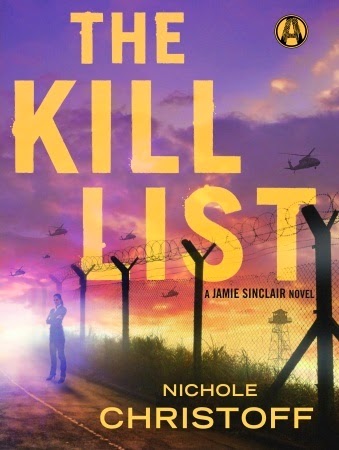
This week, the Rockville 8 and I rock the house as we celebrate my debut, The Kill List: A Jamie Sinclair Novel! To kick-off the ebook’s launch, I imagined sitting down for an interview with my main character, Jamie Sinclair. Over a cup of piping-hot coffee and a sticky, sweet treat at an M Street patisserie in Georgetown, our conversation might go like this:

Nichole Christoff: Jamie, like a long line of Mystery, Thriller, and Romantic Suspense protagonists before you, you’re a private eye. But your business card also says you’re a “security specialist.” What comes along with that job description?

Jamie Sinclair: I’m glad you asked, Nic. I serve high-risk, high-profile clients who call me when their safety is on the line—and calling the police isn’t an option.

NC: Wow. You mean like that big city mayor who ran for president a few years ago? Or that sports star who’s in all those underwear ads?

JC: I can’t really comment on the identities of individual clients. But you've got the right idea.

NC: Well, in The Kill List, you tangle with a TV news anchor’s stalker before your ex-husband claims he needs a security specialist when his little girl is kidnapped. To help him, you return to the army post where you were raised by your tough-as-nails father. Why on earth did you decide to take this case?

JC: I’d have been happy if I never saw my ex again. But this child's in danger and it’s not her fault her father is a jack—I mean, a crumb. Besides, her disappearance hits a little too close to home—and the secret reason my marriage fell apart.

NC: In the course of your investigation, you meet the fictional military police commander at the post, Lieutenant Colonel Adam Barrett. The two of you make quite a pair. He certainly makes it clear he thinks the world of you!

JS: No comment, Nic.

NC: Okay, okay. To keep this interview rolling along, I’m going to steal—ahem!—borrow a question my pals Evie Owens and MacKenzie Lucas came up with. Johnny Lee Miller, Robert Downey Jr, or Benedict Cumberbatch?

JS: Cumberbatch. Definitely.

NC: Hmmm... Back to Adam Barrett… Will you be seeing more of him in the future?

JS: You tell me. You’re the author.

NC: I’ll rephrase the question. Do you want to see more of Adam Barrett in the future?

JS: *blushing* I, uh…well…hey, isn’t my sequel coming soon from Random House?

NC: That’s true! Jamie and another familiar character return in The Kill Shot on March 17, 2015.

And there you have it, ladies and gentlemen! Thanks for celebrating my debut with me. Read on for a bit more about The Kill List: A Jamie SinclairNovel available now everywhere ebooks are sold.

In this taut debut thriller, Nichole Christoff introduces a savvy private investigator with nerves of steel—and a shattered heart.

As a top private eye turned security specialist, Jamie Sinclair has worked hard to put her broken marriage behind her. But when her lying, cheating ex-husband, army colonel Tim Thorp, calls with the news that his three-year-old daughter has been kidnapped, he begs Jamie to come find her. For the sake of the child, Jamie knows she can’t refuse. Now, despite the past, she’ll do everything in her power to bring little Brooke Thorp home alive.

Soon Jamie is back at Fort Leeds—the army base in New Jersey’s Pine Barrens where she grew up, the only child of a two-star general—chasing down leads and forging an uneasy alliance with the stern military police commander and the exacting FBI agent working Brooke’s case. But because Jamie’s father is now a U.S. senator, her recent run-in with a disturbed stalker is all over the news, and when she starts receiving gruesome threats echoing the stalker’s last words, she can’t shake the feeling that her investigation may be about more than a missing girl—and that someone very powerful is hiding something very significant . . . and very sinister. 

Sunday, October 12, 2014

D.E. Ireland Bringing to Life Eliza Doolittle, Henry Higgins, & Edwardian Mystery

D.E. Ireland: Meg Mims (left) and Sharon Pisacreta (right)
This week's guest is D.E. Ireland, author of Wouldn't It Be Deadly: An Eliza Doolittle and Henry Higgins Mystery released by Minotaur Books September 23rd. A delightful first book in a new series, Wouldn't It Be Deadly is full of rich historical detail, quirky memorable characters, and an intriguing mystery plot where Eliza Doolittle and Henry Higgins join together as amateur detectives to clear Higgins' name and track down a killer who threatens the streets of Edwardian London. You won't want to miss this 1913-set mystery romp. 

Let's take some time to get to know D.E. Ireland. D.E. Ireland is a team of award-winning authors, Meg Mims and Sharon Pisacreta. Long time friends, they decided to collaborate on this unique series based on George Bernard Shaw’s wonderfully witty play, Pygmalion. While they admit the lovely film My Fair Lady and its soundtrack proved to be inspiration, they are careful to stick to Shaw’s vision of the beloved characters from Eliza to Higgins to Pickering, Mrs. Pearce, Freddy Eynsford Hill and his family, while adding a slew of new characters they've dreamed up to flesh out their own version of events post-Pygmalion.

I posed a few questions to our talented writing team. Let's see what they had to say:

Q.: How did you settle on the time period and the detective couple (Higgins/Doolittle)?

A.: Inspirational lightning struck when Meg  was driving to Sharon’s house in west Michigan, something that frequently occurred since we are longtime friends and critique partners. During the two-hour plus drive, Meg was singing along to the My Fair Lady soundtrack when the thought occurred: “What if Eliza Doolittle and Henry Higgins teamed up to solve mysteries?” Every editor in New York says they want "something fresh and different.” Well, this idea was pretty unique. As soon as Meg arrived, she explained her latest brainstorm and fortunately Sharon also thought the idea of Eliza Doolittle and Henry Higgins as amateur sleuths was fabulous. Since we had been looking for something to collaborate on, this seemed perfect. And what fun to bring these already beloved characters to life once more. 

Q.: What did you enjoy most about writing a cozy mystery set in the Edwardian period? (And I'm calling it a cozy mystery because that's what it feels like to me).

A.: It's both a traditional and a cozy mystery, since all the violence takes place "off stage" - meaning the murders have already happened or the victim is dying. And ours wouldn't be considered a "dark" mystery, since we infuse humor into the characters and situations. We also love that Eliza and Professor Higgins have joined the genre’s other celebrated male-female detective duos, and hope readers really love the rivalry and interactions between the two of them. In addition, we are huge fans of Downton Abbey, Mr. Selfridge, Upstairs/Downstairs, Edwardian costumes, English teatime, the changes brought on with World War I, etc. Such an exciting era.

Q.: I understand D.E. Ireland is a collaborative team. Can you explain how a collaboration works?

Sharon and I both have similar writing styles, and have critiqued each other's writing for over twenty years. We have also been published separately under our own names: Meg Mims and Sharon Pisacreta. Sharon wrote four historical romances and one contemporary with Dorchester (one of them under the pen name ‘Cynthia Kirk’), along with several mystery and fantasy short stories. Meg has five books as well under her name--two western mysteries and three contemporary romance novellas. For our first collaborative effort, we came up with the pseudonym D.E. Ireland: D.E. is Eliza Doolittle backwards, and Ireland is a nod to G.B. Shaw's birthplace in Dublin. We also had to put together a way to write as a team. We plot the outline in great depth (from 20 to 30 single-spaced pages!) and then assign chapters to each other for the first draft. One to two revised drafts follow before undertaking a complete read-through aloud to each other. This is done over the phone – several chapters at a time – since we live so far from each other. That way we can hear any awkward phrases or catch any typos or punctuation problems. Whew. It works for us.

Q.: What's next?


A.: Book 2, Move Your Blooming Corpse is coming in 2015. It's set at Royal Ascot, of course, and includes horse racing as well as the suffragette movement. We're both also working on separate cozy series. Life is busy, but good!

Thanks so much for visiting us this week, D.E. Ireland. I loved your book. As I mentioned above, I found Wouldn't It Be Deadly a fascinating glimpse into the time period, with its skillfully layered historical detail and it's intriguing plot mixed with characters that are familiar and beloved. Nicely done. I love mysteries in general and cozy mysteries more specifically. This book had the feel of a historical cozy mystery to me. Rich in the tradition of Agatha Christie. Thanks for sharing your time and talent with us.

Readers, be sure to check out Wouldn't It Be Deadly. I think you'll be pleasantly surprised by this twisty, fun mystery which springs from George Bernard Shaw's beloved characters in Pygmalion.

Buy Links for Wouldn't It Be Deadly:

Monday, October 28, 2013

Zombie Mythos & The Culture of Fear

The Rockville 8 is proud to host guest blogger, Nikki Hopeman, a talented new voice in mystery and horror writing. Nikki's debut novel, Habeas Corpse, will be released November 2, 2013, by Blood Bound Books, and her masterful short story "Black Bird" appears in Mistresses of the Macabre, out now by Dark Moon Books and available on amazon.com. Today Nikki talks to us about Zombie Mythos and The Culture of Fear.

#
Ahhhh … October. Beautiful reds, golds, and yellows adorn my neighborhood and I get to look forward to all the local munchkins stopping by for a trick or a treat. The crisp scent of falling leaves hangs in the air… and the foul odor of decaying flesh hangs about my computer.

Photo Credit: 123RF
I’m a mystery and horror writer. I’ve written stories about such things as wrongfully accused witches, garage sales gone wrong, vengeful birds, and nerdy zombies. Theo Walker, the protagonist in my upcoming novel, Habeas Corpse, is an awkward zombie who works for the Pittsburgh Bureau of Police as a forensic technician.

Zombies are, by far, my favorite horror trope and they are wildly popular right now. Why are they so interesting and how did the zombie mythos come about? There is no one singular origin for the zombie in popular culture, like we can trace the vampire’s appearance to Bram Stoker’s Dracula. Although there is mention of the dead rising to eat the living in the Sumerian tale, The Epic of Gilgamesh, today’s pop culture zombie is mostly a construct of Haitian religious beliefs and our own Western ideas of terror.

Historically, zombies have existed in many cultures with names like revenant, draugr, and jiangshi. No matter the name, a zombie is a person who has returned from the dead and kills to satiate its own hunger. According to certain branches of Vodou, or voodoo, a sorcerer can revive a dead person. These "living dead" are then used as slaves, sometimes for nefarious means, and forever under control of the sorcerer. The idea of an eternity of slavery to an evil sorcerer seems unpleasant, indeed terrifying, to most people.

Those of us who love zombies work to make them scarier, new, and fresh, more interesting than Romero’s shamblers or even the faster predators we’re familiar with from The Walking Dead. How does a writer put a spin on a time-honored trope without losing the essence of what he or she is writing?

For horror writers, the first thing to look at is what makes the monster scary. Most monsters kill, so either their method of dealing death must be highly unusual or we have to look at something else. We are repulsed by the idea of aimless wandering, of forced slavery, and being imprisoned in our bodies. Our fascination and loathing of the modern zombie takes root in those fears of mindless subservience. Add to these fears the threat of a contagious, cannibalistic eating machine, and the horrific modern zombie is born.

How does a writer capitalize on a known fear? Tweak an element of what makes a monster terrifying or personalize it in some way to make it relevant to the reader. In Habeas Corpse, my zombies are part of society, but they live just on this side of exclusion. My zombies desire flesh, but an intense desire not to be outcast keeps their cannibalistic yearnings in check… at a price. In order to be a part of their community, my risers must deny what they are.

The next time something scares you (except for the little gremlins and goblins at your Halloween door) think about what it is that creates the fear… and take it one step further.

Happy haunting!
 
#

Nikki Hopeman loves the kind of horror that leaves her quaking in the back of the closet, the kind that won't let her close her eyes. Life before writing includes a bachelor’s degree in microbiology, a few years as a veterinary technician, floral arranger, blueberry picker, babysitter, and VW Beetle mechanic. She holds an MFA in writing popular fiction from Seton Hill University. When she’s not writing, she can be found in the tattoo chair or on her Harley Davidson. Nikki shares her home in Pittsburgh with her husband, two sons, two crazy corgis, and an angry hamster. She can be reached at www.nikkihopeman.com or on Twitter @nikkihopeman. Her short story, "Black Bird," appears in Dark Moon Books’ Mistresses of the Macabre. Habeas Corpse, Nikki’s debut novel, will be available from Blood Bound Books on November 2.


Sunday, June 2, 2013

Fun in the Sun: Nic’s 2013 Summer Reading List

Ah, summer… ’Tis the season of lazy, hazy days when sprawling poolside with a tall lemonade and a good book is the perfect pursuit. I don’t know about you, but when winter is in its death throes, I find myself building my summer to-be-read pile as eagerly as I plan my first pedicure paint color. Now, with Memorial Day in the rearview mirror, the summer season is upon us. So, without further ado, here are my top five picks for reading, Summer of 2013 style:

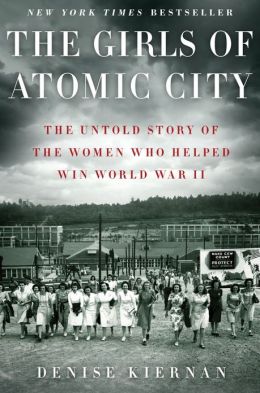
The Girls of Atomic City: The Untold Story of the Women Who Helped Win World War II5. The Girls of Atomic City: The Untold Story of the Women Who Helped Win World War II by Denise Kiernan
“What?” you say. “Non-fiction in the summer? Nic, what happened to fun-in-the-sun reading?” But what could be more fun than the war-time tale of a secret city in the mountains, populated exclusively by women, hired to work in a mysterious complex of factories and labs without any idea of how their jobs relate to the jobs of their colleagues? Well, the entire tale is true. We’ve all heard of Rosie the Riveter, but the ladies of Atomic City, hidden deep in the American countryside, were building bomb parts and no one knew it—until now. So this summer, I’m going to celebrate the untold achievements of the women who came before me by reading all about their hush-hush role in winning my freedom and yours.

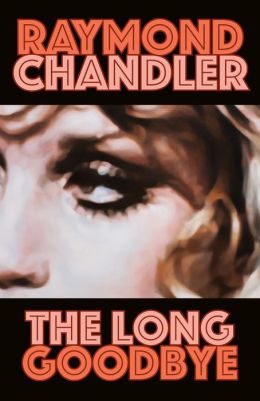
4. The Long Goodbye by Raymond Chandler
The Long GoodbyeI’m an enthusiastic Chandler fan, but somehow, I’ve never read this winner of the 1955 Edgar® for Best Novel. Many, including Chandler himself, have said this novel is his best work. Others say it’s his worst. So, I realized, I should decide for myself. After all, Chandler’s work is foundational to my own. If we’re writers, we’re following in the footsteps of others who’ve paved the way. Why not read the work of an author who blazed the trail you follow? For me, that’s Chandler and his Edgar®-winning work.

3. The Other Woman by Hank Phillippi Ryan
The Other Woman

I first met Hank Phillippi Ryan at a champagne reception in San Francisco. My first manuscript was up for the Romance Writers of America Golden Heart® while her debut novel was on the short list for the Golden Heart’s® big sister, the RITA®. She probably wouldn’t remember me among the nervous writers who clutched a champagne flute that day, but I certainly remember her first novel. This year, it came as no surprise to hear her latest book won the 2013 Mary Higgins Clark Award. This summer, I plan to enjoy Hank’s latest novel as much as I enjoyed her RITA®-nominee.

 
The Other Typist
2. The Other Typist by Suzanne Rindell
Summer is the perfect time to find a new love and that’s why I’ve got my eye on this debut novel from doctoral student, Suzanne Rindell. Kirkus is calling it a cross between a Hitchcock film and F. Scott Fitzgerald’s most famous work. So if you’ve got a crush on Jay Gatsby, and if you want to flirt with a fresh mystery about a Flapper-era police stenographer caught in the middle of a murder case, make a date with this book.

London Falling
1. London Falling by Paul Cornell
A veteran of the writing team that brought us the return of Dr. Who, Paul Cornell says he faced a genre identity crisis when it came to writing this book. And which of us writers can’t relate? Cornell believes Urban Fantasy—and maybe some Paranormal Romance—is rapidly becoming the new Horror. As a result, London Falling straddles genres. But with its new take on two cops combating evil on London’s dark streets, I can’t wait to get my hands on it, no matter how the booksellers decide to shelve it.

Now you know what I’ll be reading this summer. When you visit the pool, if you see a woman with There’s Something About Cherry on her toes and one of these books in her hand, that’ll be me. Feel free to stop by and say hi. In the meantime, tell the Rockville 8. What’s on your summer reading list?

Monday, September 17, 2012

Agatha Award Winner Sandra Parshall Talks Political Thrillers . . . Or Not


The Rockville 8
is thrilled to host the Agatha Award-winning author of the Rachel Goddard mysteries, Sandra Parshall. 
Sandra's fifth book, Bleeding Through, was published September 4. 
She lives in McLean, VA, with her husband and two cats. 
Visit her website at http://www.sandraparshall.com and read her Wednesday blog at http://www.poesdeadlydaughters.blogspot.com. But first, Sandra visits the Eight and spills the beans about her writing life and living near the nation's capital. Take it away, Sandra.

Someday I’ll write that political thriller… or not
by Sandra Parshall

Sometimes I feel as if I’m wasting my own personal setting.

I’ve lived in or just outside Washington, DC, for half my life, but except for my first book, The Heat of the Moon, and a couple of scenes in Disturbing the Dead and Bleeding Through, I’ve never set a book here. More specifically, I’ve never tried to write a Washington thriller.

You know the kind of books I mean. How could you not know, when you see them in every bookstore and every drugstore and supermarket book rack? Often they have flags on the cover, or a portentous image of the White House or the Capitol. Shadowy figures running for their lives from unseen pursuers are also popular cover art for Washington-centered novels. Within the pages of these books, you’ll find plots to destroy America, plots to take over the world, plots to take down a single politician by digging up (literally, in some cases) a hidden scandal. Since The Da Vinci Code, an increasing number of authors have introduced ancient documents and such into their very modern political thrillers. Many people die. Lives are ruined. Everybody is sadder but not the least bit wiser at the end.

Why can’t I write this sort of book and cash in on the trend? I live here. Inspiration is all around me. Members of Congress shop at the same supermarket and hardware store I patronize. My husband is a longtime Washington journalist (now retired from a newsmagazine) who could give me lots of juicy details to work into my plots. And I care about politics. I think a citizen would have to be crazy these days to be indifferent to what’s happening in DC. So I should dream up a plot, sit down at my computer, and get started on my future bestseller, right?

The only problem: I couldn’t do it if you put a gun to my head.

I’m not disparaging the people who write and read political thrillers, but I can’t do either.  If a book cover has a picture of the U.S. flag or a federal government building, I steer clear of it and leave it for the true fans of the subgenre. Real politics makes me anxious enough without having fictional scenarios added.

I didn’t even let Rachel stay in McLean. In the second book, I moved her to the mountains, far from the taint of national politics. I’m happy writing about a small community in the Blue Ridge. I find much more drama there, on a human scale, than I would in the Situation Room or a campaign headquarters.

Still, when I drive past the White House or the Capitol, I can’t help feeling a small twinge of regret as I wonder what’s going on inside that might inspire a book. Maybe someday I’ll get an idea I can’t resist, and suddenly I’ll be writing a political thriller. Who knows? When it comes to writing and publishing, I’ve learned the same lesson I absorbed long ago about real politics: don’t make predictions, and never say never.

Sunday, January 24, 2010

A Knight's Tale

This week, the world marked the passing of mystery master, Robert B. Parker. Readers and writers everywhere mourn his loss. Including me.

A writer to the end, the 77 year-old Parker reportedly wrote five pages a day, six days a week. And reports say he died at his desk working on those pages. Which seems right for a writer, in a world where so much is wrong.

You might know Parker's work through the Jesse Stone, made-for-TV movies starring Tom Selleck. Or you might recall Spenser for Hire, which aired on ABC decades ago. Maybe you're a fan of its spin-off, A Man Called Hawk. But if you're like me, you're a fan of the novels that gave rise to these shows. And of the man who wrote them.

Parker is said to have viewed the hard-boiled detective as the modern knight of chivalric tradition. Nowhere does he prove this point better than in his Spenser novels. Behind the classic structure, the spare sentences, the sharp characterizations, and the all-out action scenes, Parker's heroes - and heroines - hold true to honor, love, and justice.

Consequently, many consider Parker the heir apparent to Raymond Chandler. The Chandler estate even selected him to complete Chandler's unfinished work. It's called Poodle Springs. A first edition holds pride of place on my bookshelf. Parker went on to write a sequel to my favorite Chandler novel, The Big Sleep. He called it Perchance to Dream.

In my opinion, Parker's Spenser novel Potshot is a thoughtful tribute to that other noir icon, Dashiell Hammett and his Red Harvest. Like Hammett's hero, Spenser's mission is to clean up a corrupt town. But Parker redeems his hero in a way Hammett couldn't. The darkness always drags Hammett's heroes down. Spenser, however, always rises above. With a little help from his friends, of course. Which begs the question: which novel is a reflection of the world we live in? For my part, I hope we're living in Spenser's world.

From Spenser and Hawk to Sunny Randall and Jesse Stone, Parker reinvented the detective hero time and again. I'll miss those heroes. And I'll miss the man who created them. We'll have one more chance to savor his work, though. Parker's final Jesse Stone novel is slated for release later this year.

Until then, and long after, I'll wonder about those pages, spread across the desk as Robert Parker slipped away from us. Who will be tapped, as he was for Chandler, to polish off that work-in-progress? Mostly, though, I wonder who can?